Zur guten Quelle. A restaurant website whose owner can photograph a paper menu and have it online a minute later.
ENGINEERING / DESIGN · 2026
A restaurant website whose owner can photograph a paper menu and have it online a minute later.
CLIENT WORK
Brief
An Italian restaurant in Germany changes its lunch specials weekly and its full menu with the seasons. The kitchen runs on service, not content management. The public site had to feel like an evening at the table, and updating it had to be quicker than printing a new sheet of paper.
2026 · Client work · Brand direction · Web design · Full-stack engineering
- 01181-dish catalogue
181 dishes across 22 categories, weekly lunch specials and an Italian culinary glossary, managed end to end by the restaurant.
- 02Photo OCR import
Photograph-to-menu pipeline combining on-device Tesseract OCR with structured Gemini extraction, staged for human confirmation before publish.
- 03Admin & analytics
Twelve-area administration CMS with first-party visit and conversion analytics, interactive charts and zero third-party tracking scripts.
- 04QR & backups
Built-in search metadata editor, printable table QR code generator and automatic dated JSON backups on every content mutation.
- 05Bilingual system
Bilingual German and English architecture across every storefront route, dish category and editorial block.
PL. 01 / SCREEN
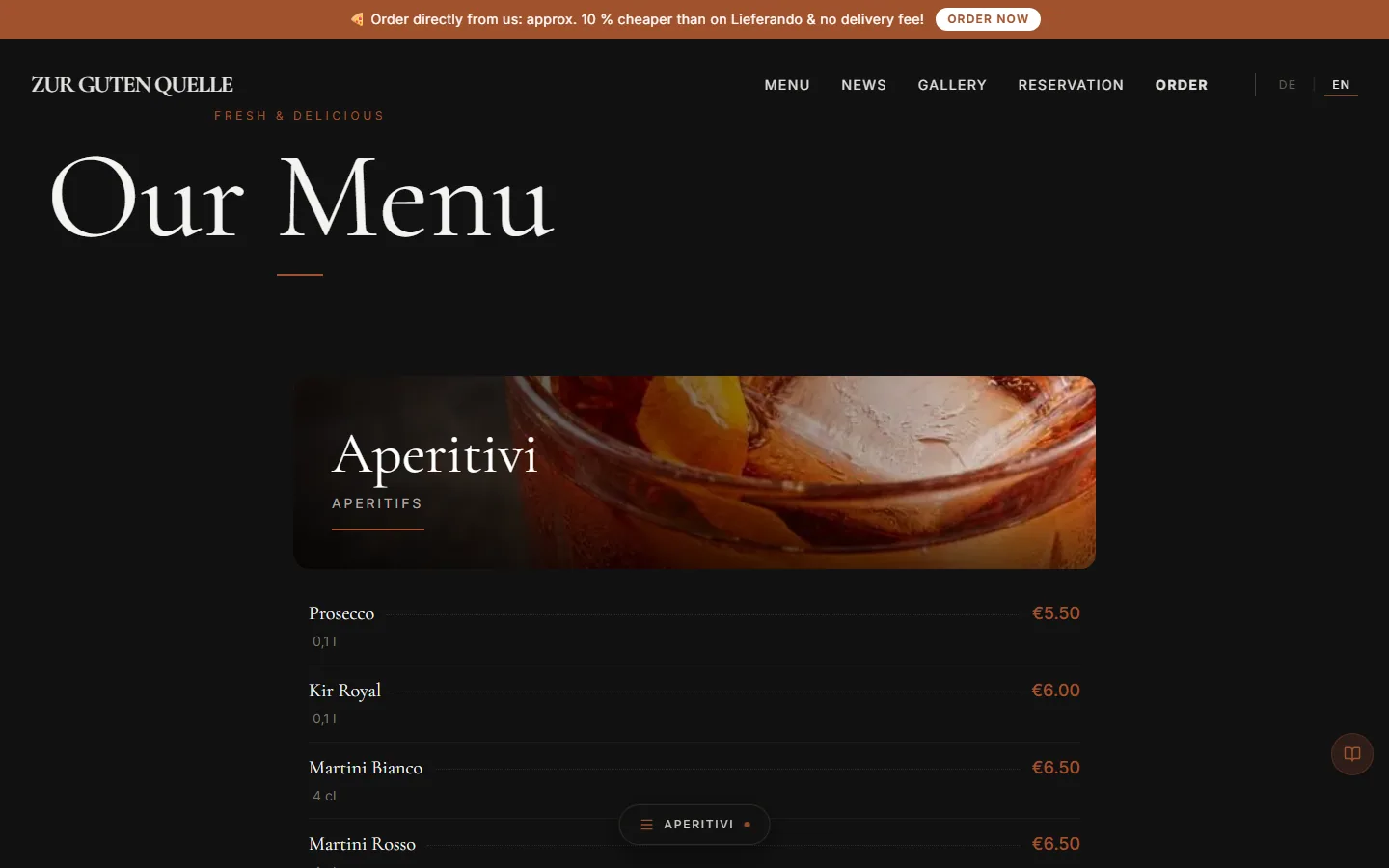
The interactive online menu page listing Aperitivi with prices and category drawer on a dark background.
PL. 02 / SCREEN
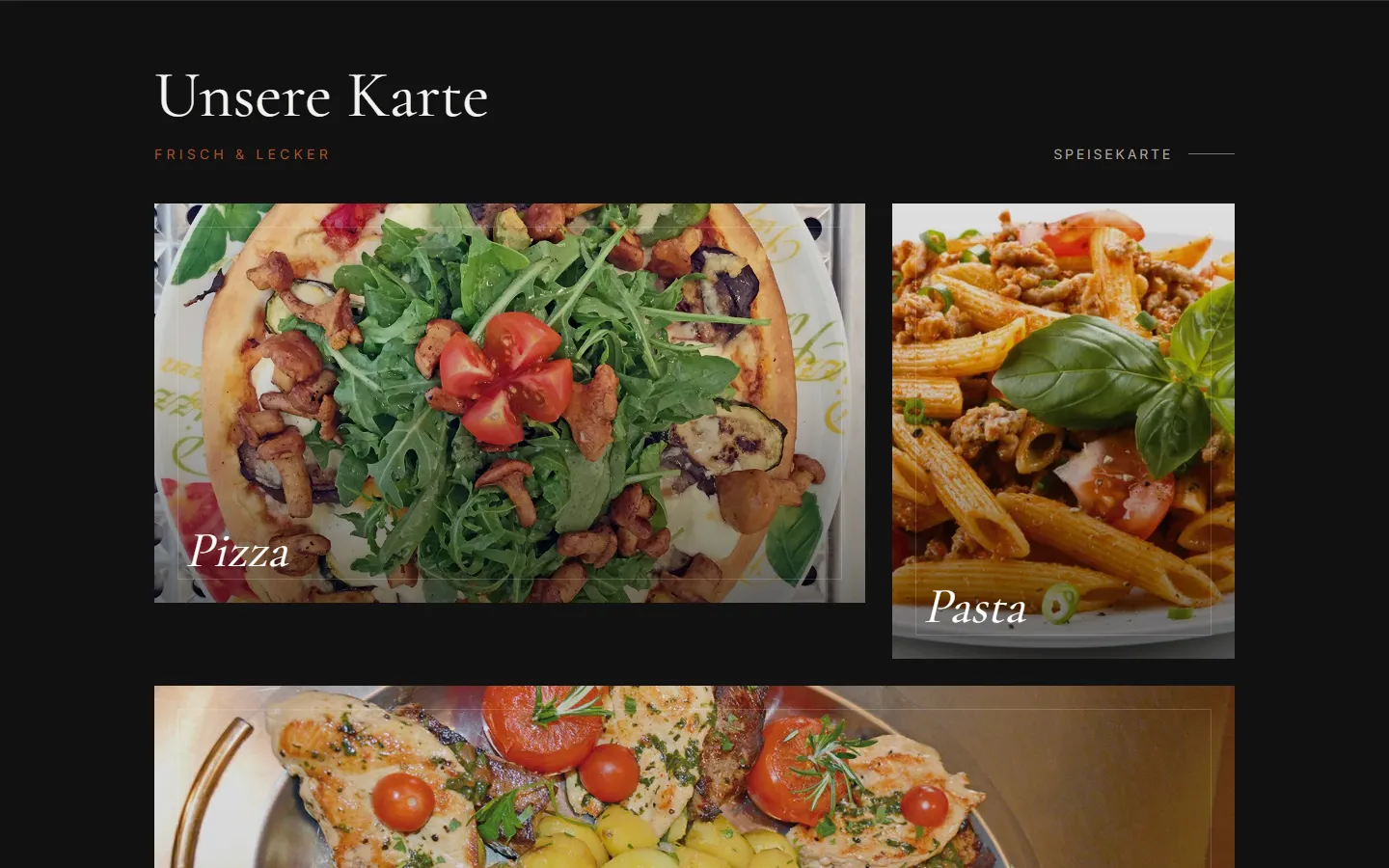
The Unsere Karte category showcase featuring Pizza, Pasta and Schnitzel visual cards.
PL. 03 / SCREEN
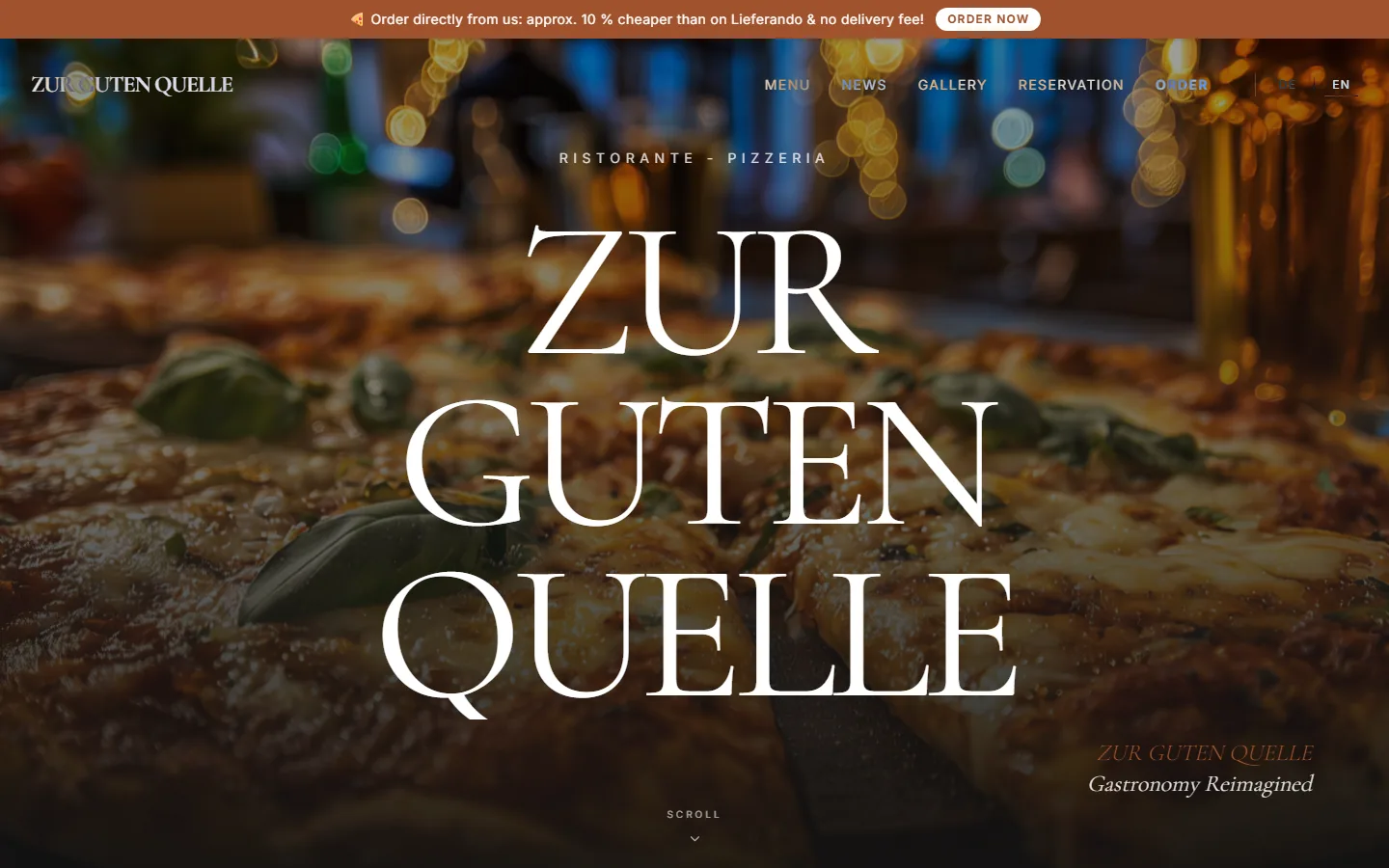
The Zur guten Quelle English landing screen with direct-order banner and stacked serif hero.
PL. 04 / SCREEN
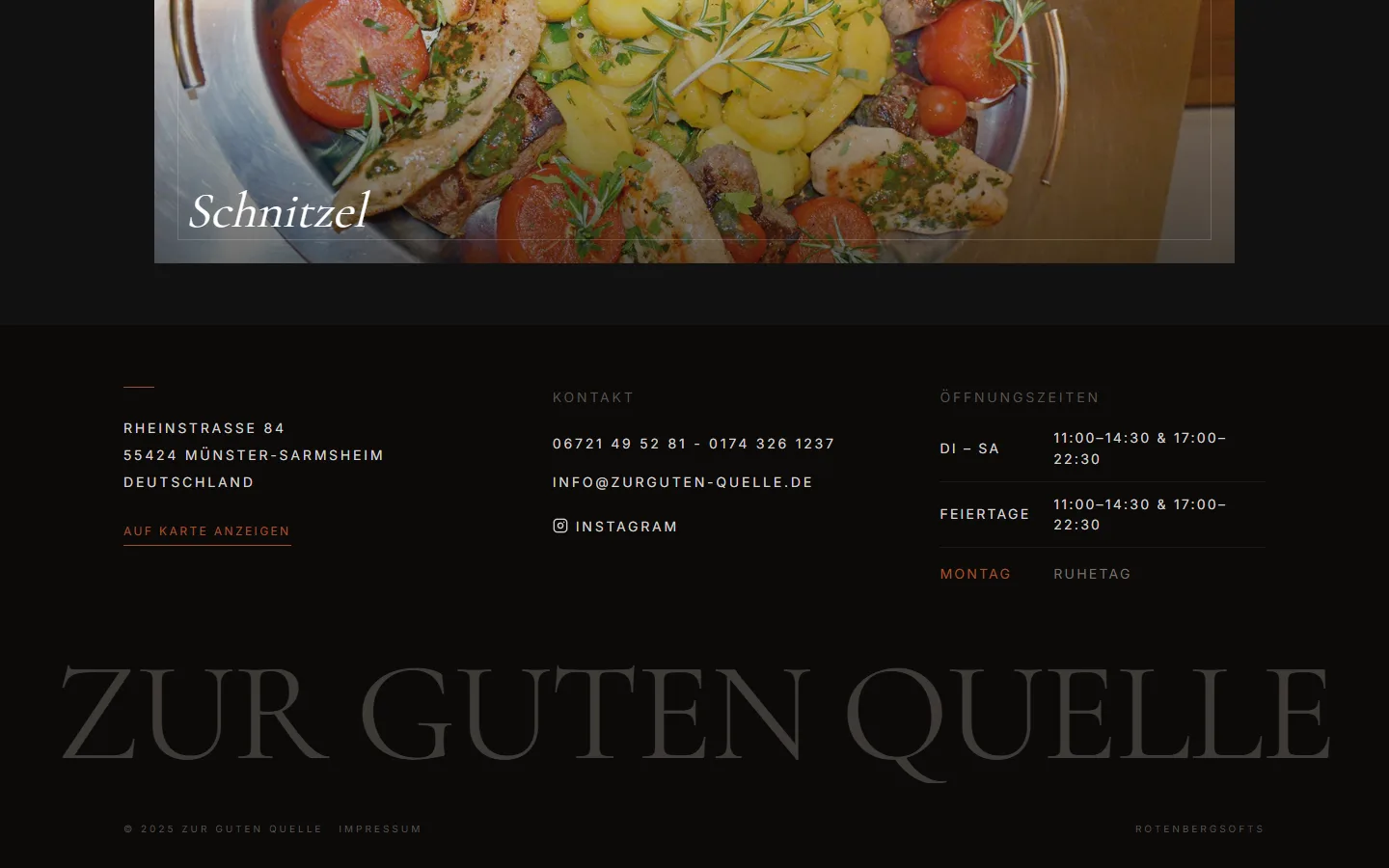
The site footer with Münster-Sarmsheim address, opening hours and oversized ZUR GUTEN QUELLE wordmark.
PL. 05 / SCREEN
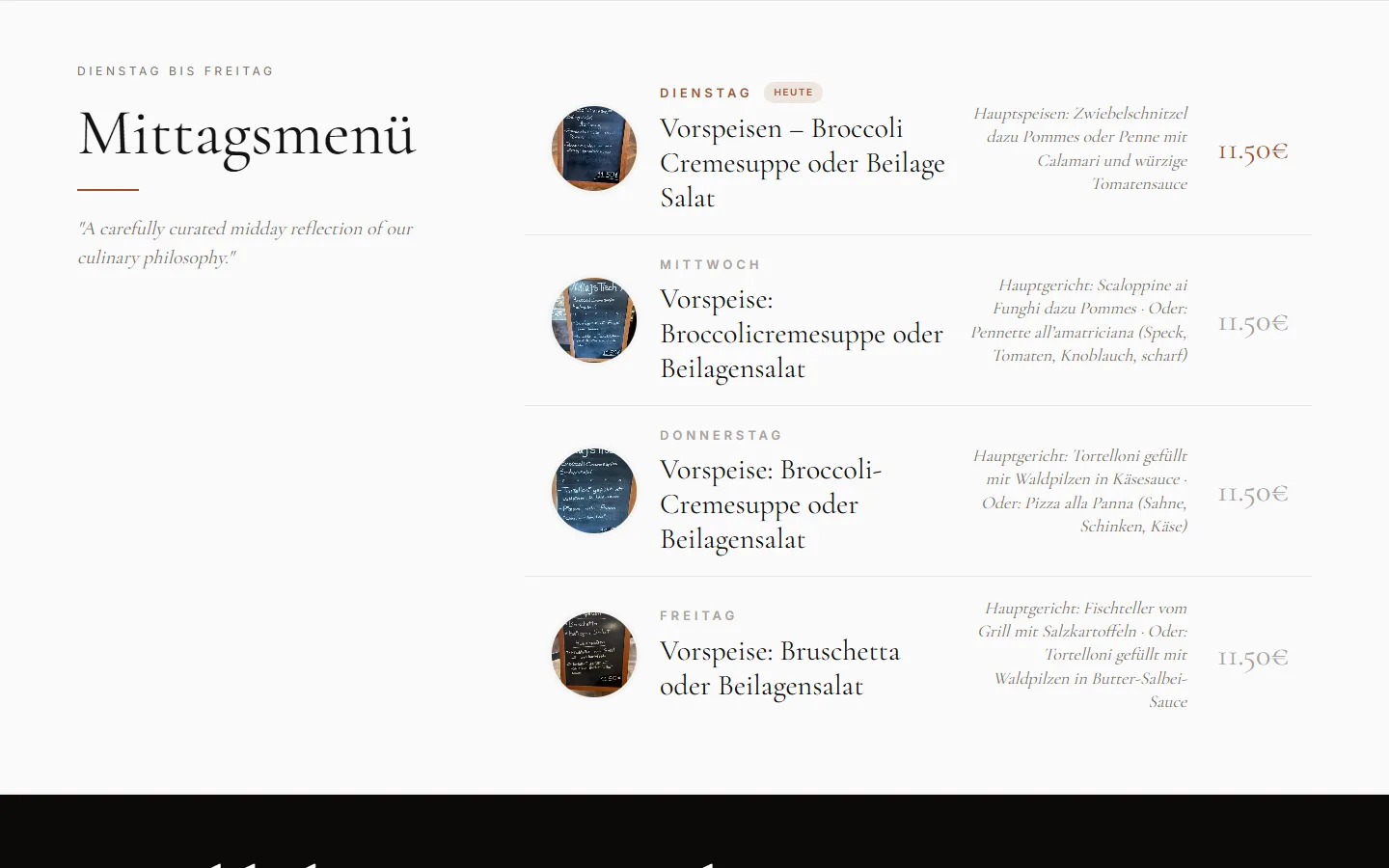
The Tuesday-to-Friday Mittagsmenü section with daily specials, pricing and editorial typography on warm stone.
FIG. 01 / DATA MODEL
181 dishes · 22 categories
FIG. 02 / PAGE MAP
26 routes · 12-area admin cms
FIG. 03 / COMPONENTS
18 components · storefront tree
FIG. 04 / LOGO GRID
102 symbols · admin modules
FIG. 05 / TOKENS
2 locales · de & en throughout
SPEC / ZUR-GUTEN-QUELLE
Web design and full-stack Next.js engineering, pairing an editorial bilingual storefront with a twelve-area administration system. An atomic JSON document store backs 181 dishes across 22 categories, weekly lunch specials, news, gallery and first-party analytics. The menu importer reads a photographed page with on-device OCR and structures categories, dishes and prices through Gemini for one-click confirmation.
- Year
- 2026
- Type
- Client work
- Stack
- Next.js 16 / React 19 / TypeScript / Tailwind 4 / Auth.js / Recharts / Tesseract.js / Gemini API / Lenis
- 01181-dish catalogue
Atomic file-backed JSON store in src/lib/jsonDb.ts. Menu items, categories, lunch specials and editorial blocks are read and written through typed server actions with dated backups on every mutation.
- 02Photo OCR import
Photographed menu pages are segmented on device with Tesseract.js and passed to a structured Gemini prompt that returns typed categories, dish names, descriptions and prices for review.
- 03Admin & analytics
Public routes render from the same document store as the twelve-area admin dashboard, with first-party visit and conversion events recorded directly to the analytics log.
- 04QR & backups
Search metadata, Open Graph tags, printable QR codes and rollback snapshots are managed inside the dashboard without external plugins or third-party trackers.
- 05Bilingual system
Every storefront view and editorial field carries paired German and English keys, switched at runtime without duplicating route trees.
PL. 01 / WIREFRAME
02.webp · 1440 × 900
PL. 02 / WIREFRAME
screen-menu.webp · 1440 × 900
PL. 03 / WIREFRAME
01.webp · 1440 × 900
PL. 04 / WIREFRAME
screen-contact.webp · 1440 × 900
PL. 05 / WIREFRAME
screen-lunch.webp · 1440 × 900
FIG. 01 / DATA MODEL
181 DISHES · 22 CATEGORIES
data/db.json
Atomic file-backed JSON store in src/lib/jsonDb.ts. Menu items, categories, lunch specials and editorial blocks are read and written through typed server actions with dated backups on every mutation.
FIG. 02 / PAGE MAP
26 ROUTES · 12-AREA ADMIN CMS
src/app
Photographed menu pages are segmented on device with Tesseract.js and passed to a structured Gemini prompt that returns typed categories, dish names, descriptions and prices for review.
FIG. 03 / COMPONENTS
18 COMPONENTS · STOREFRONT TREE
src/app/layout.tsx, page.tsx
Public routes render from the same document store as the twelve-area admin dashboard, with first-party visit and conversion events recorded directly to the analytics log.
FIG. 04 / LOGO GRID
102 SYMBOLS · ADMIN MODULES
src/components/admin
Search metadata, Open Graph tags, printable QR codes and rollback snapshots are managed inside the dashboard without external plugins or third-party trackers.
FIG. 05 / TOKENS
2 LOCALES · DE & EN THROUGHOUT
src/lib/i18n.tsx, translations.ts
Every storefront view and editorial field carries paired German and English keys, switched at runtime without duplicating route trees.
Codebase: 366 symbols, 1,001 dependencies
THE CODE
A dependency map of the production code. Scroll through the four architectural layers.